LunaTranslator
An open-source GalGame translator that can be configured with OpenAI-compatible translation services.
Chat settings option
In the Models Hub console, under System Settings -> Chat Settings, you can add the following shortcut option to enable one-click filling into LunaTranslator from the token management page:
{ "LunaTranslator": "lunatranslator://llmapi/base64?data={cheryConfig}" }LunaTranslator is a free, open-source visual novel (GalGame) translator dedicated to delivering a native-language-level visual novel experience.
- Project: https://github.com/HIllya51/LunaTranslator
- Documentation: https://docs.lunatranslator.org
Features
-
HOOK Primarily uses HOOK to extract game text, with compatibility for nearly all common and obscure visual novels
-
Embedded translation For some games, translations can be embedded directly into the game for an immersive experience
-
HOOK emulator For most games on NS/PSP/PSV/PS2, the HOOK emulator can read game text directly
-
OCR A built-in high-accuracy OCR model, plus support for many other online & offline OCR engines, for flexibly reading any text
-
Rich translation interfaces Supports almost all translation engines, including large language model translation and offline translation
-
Language learning Supports Japanese word segmentation and kana annotation, AnkiConnect, and the Yomitan plugin
-
Text-to-speech Supports a large number of online & offline TTS engines
-
Speech recognition On Windows 10 and Windows 11, you can use Windows speech recognition.
Installation
Download and install from LunaTranslator Documentation - Download & Launch & Update.
Connecting LunaTranslator to Models Hub
LunaTranslator supports connecting to both a locally deployed Models Hub and third-party Models Hub services built with Models Hub.
One-click configuration
-
In the Models Hub console, under
System Settings->Chat Settings, add the following shortcut option:{ "LunaTranslator": "lunatranslator://llmapi/base64?data={cheryConfig}" }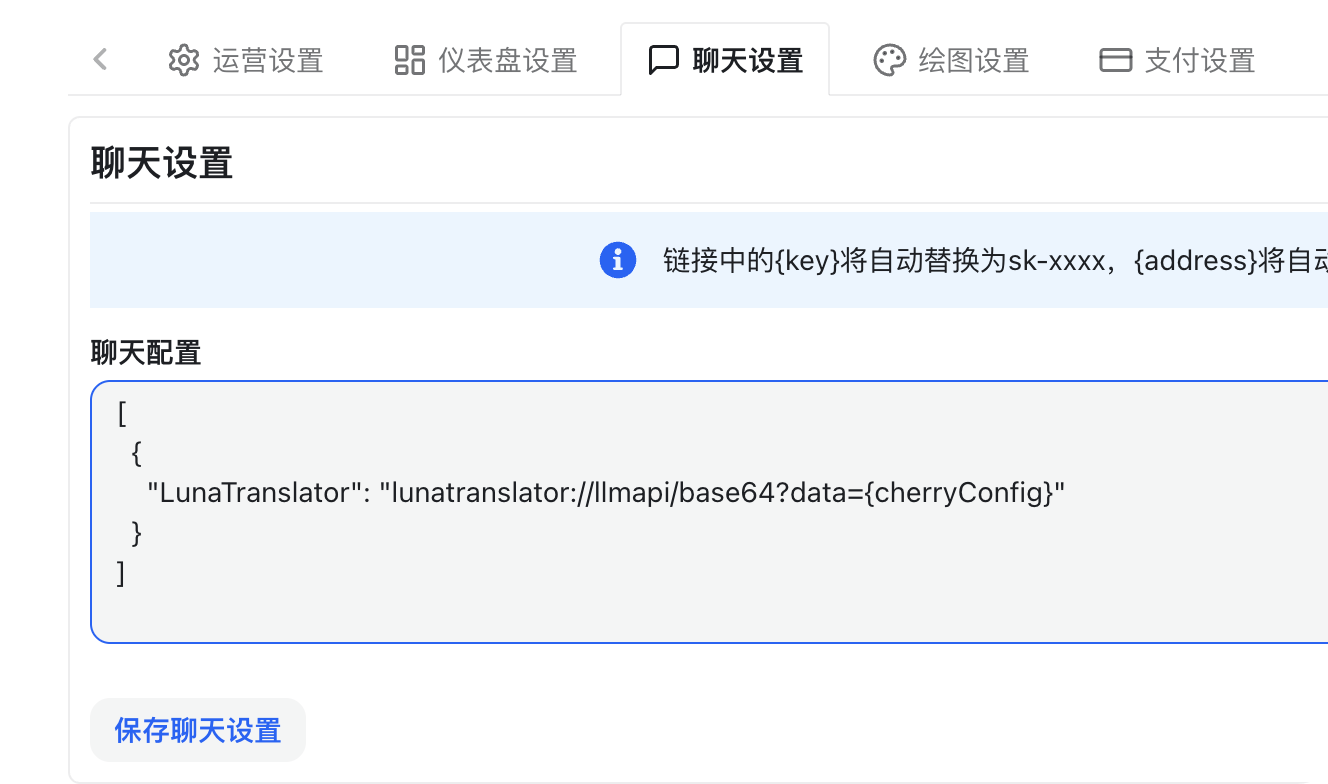
-
In the
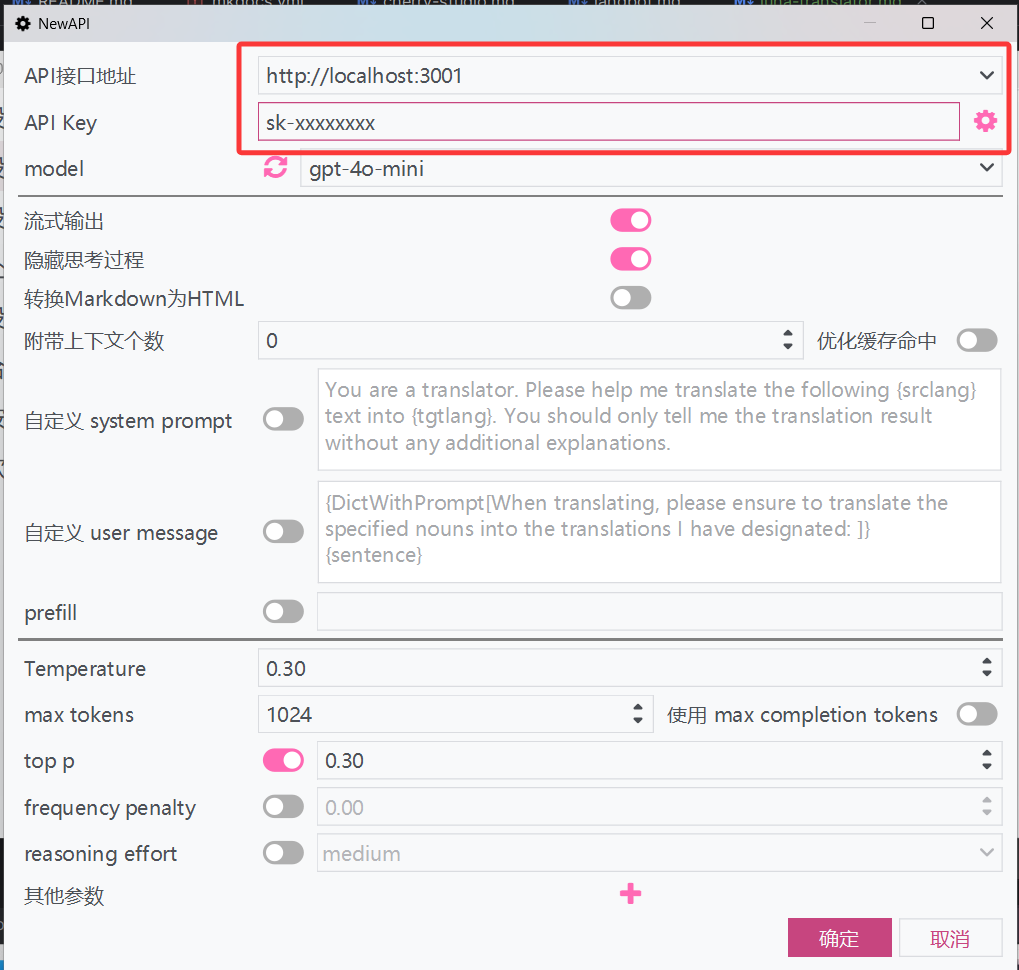
Models Hub->Console->Token Managementtab, select the token you want to use in LunaTranslator, click the dropdown next to the chat button, and chooseLunaTranslator. This redirects you to LunaTranslator and automatically configures the API URL and API Key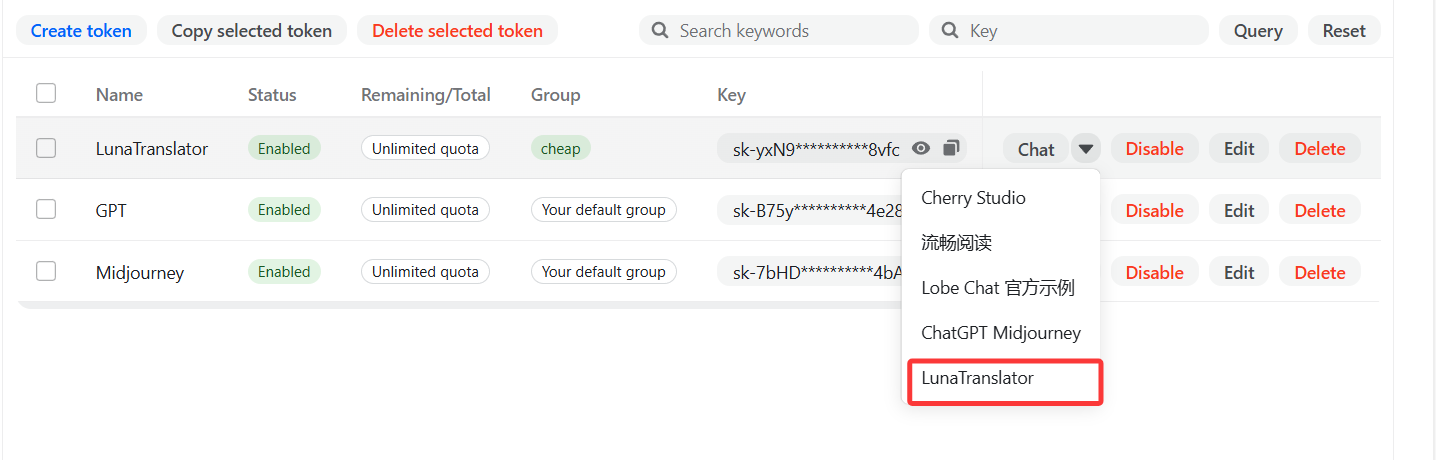
-
In
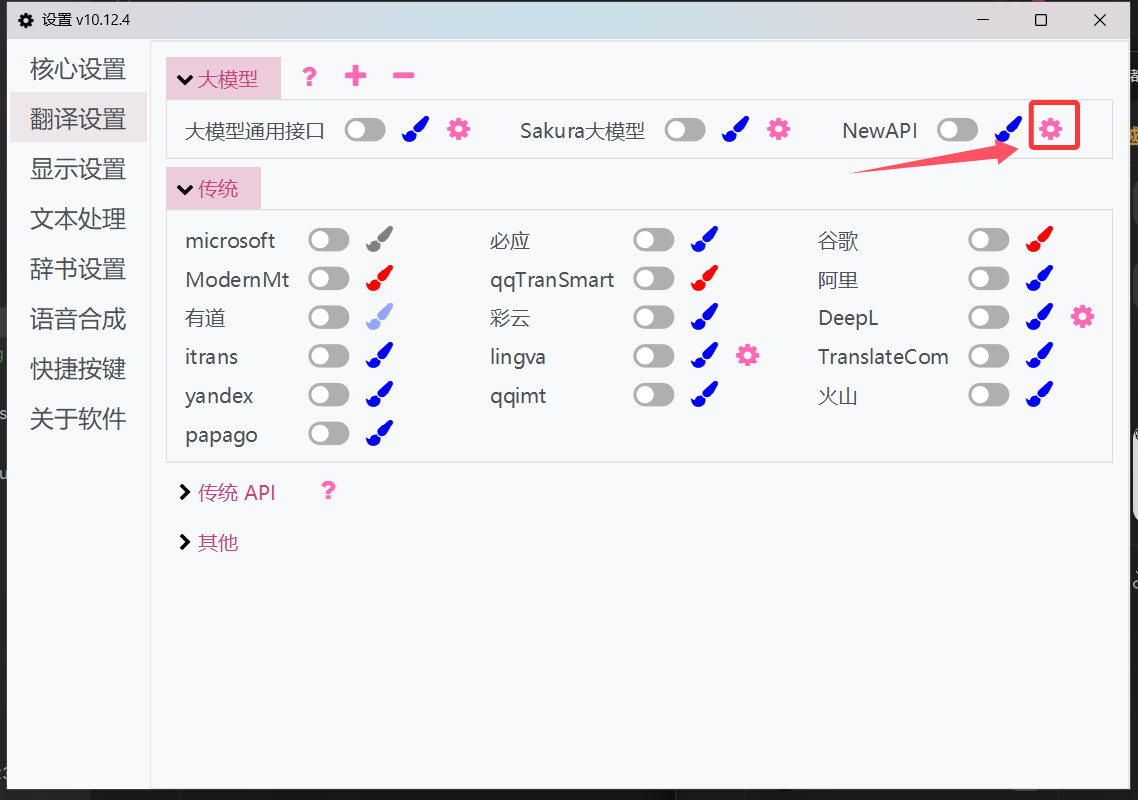
LunaTranslator->Settings->Translation Settings->LLM, a new LLM interface configuration appears. Click to edit it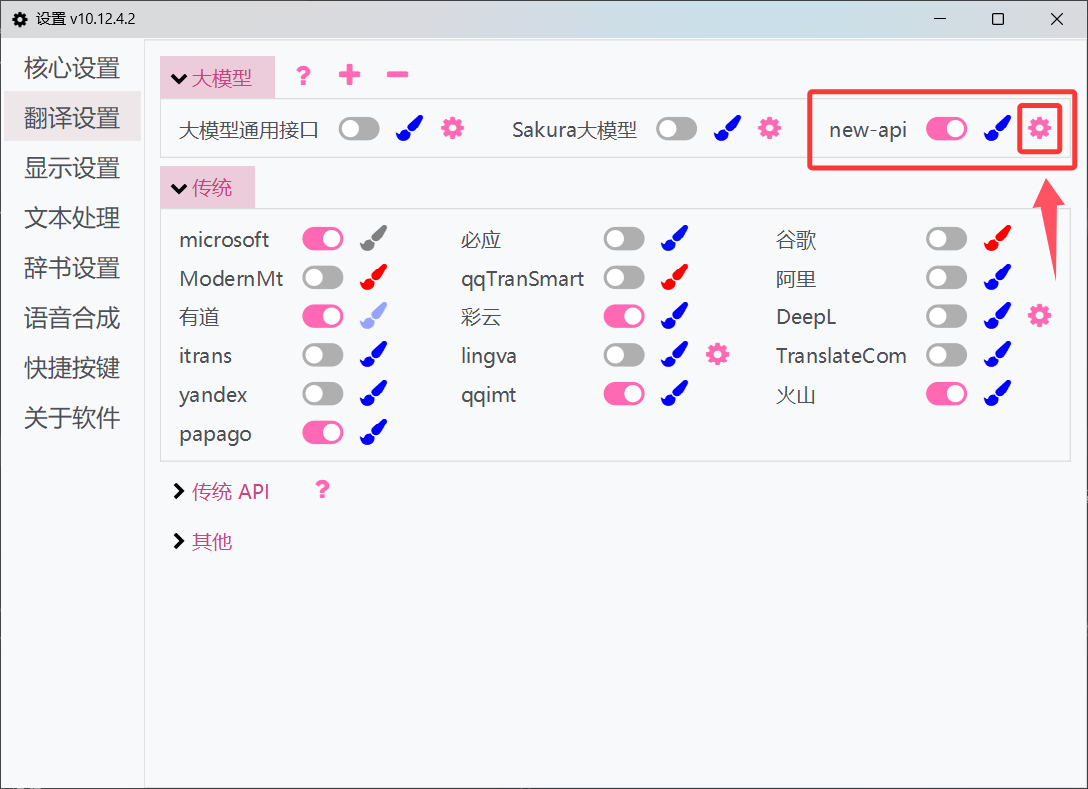
-
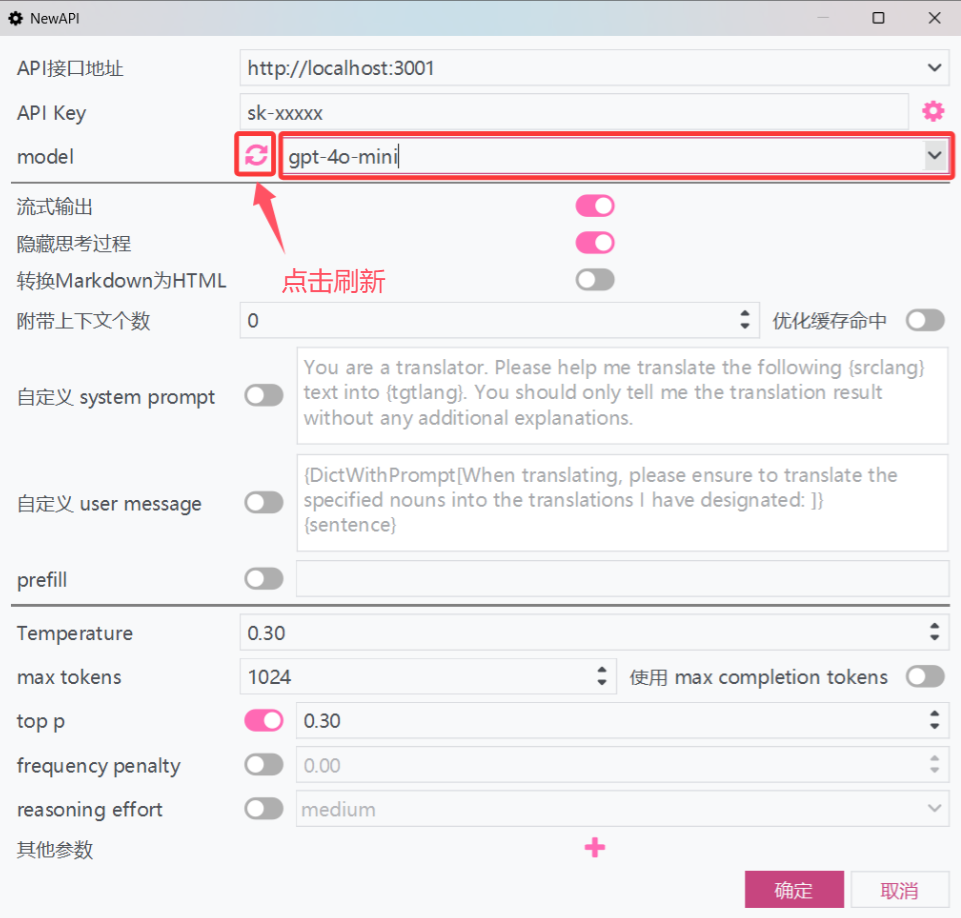
Click the refresh button next to the model dropdown to fetch the model list from the Models Hub platform, select or type a model name, then click OK to save
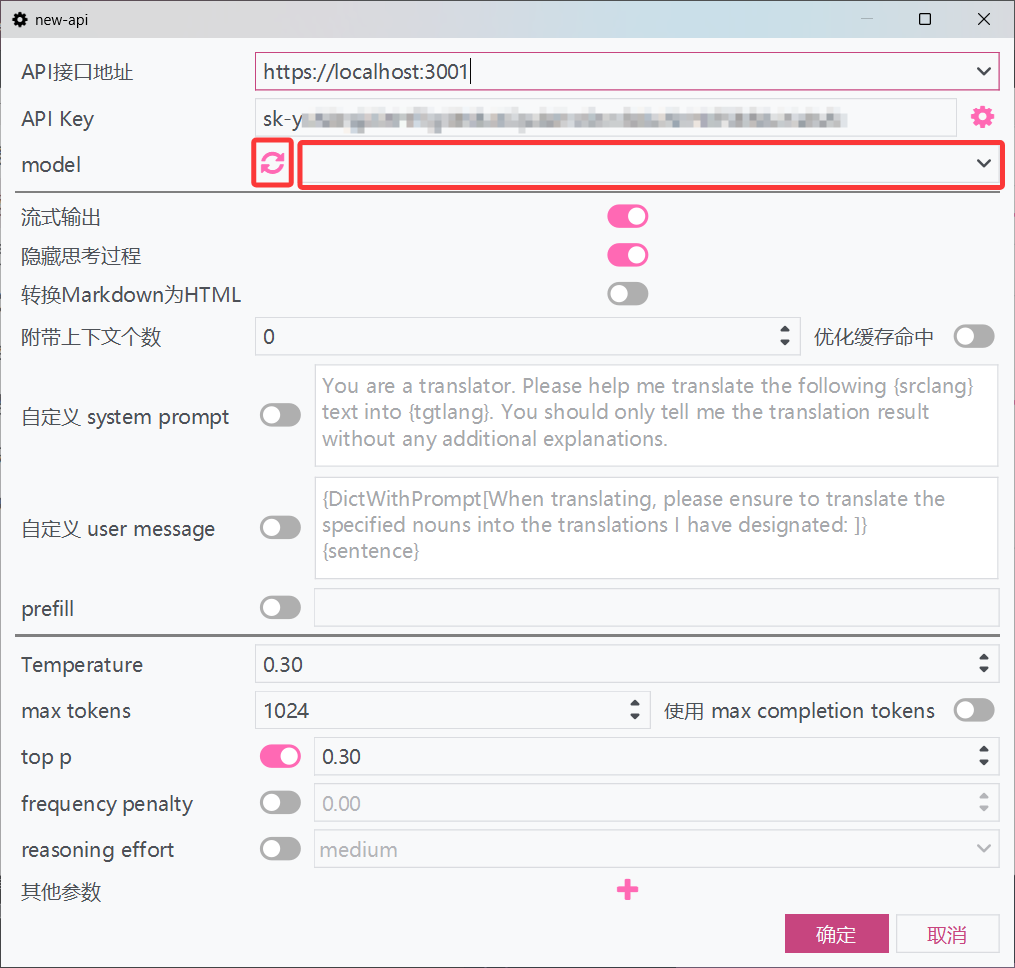
-
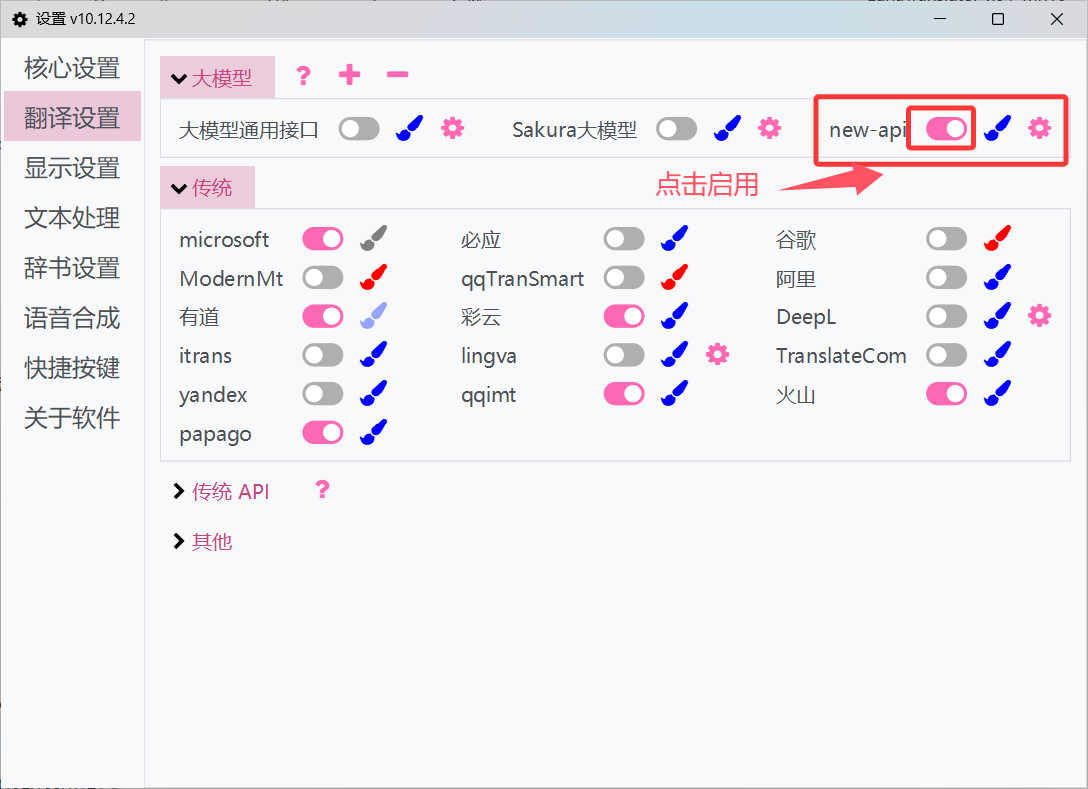
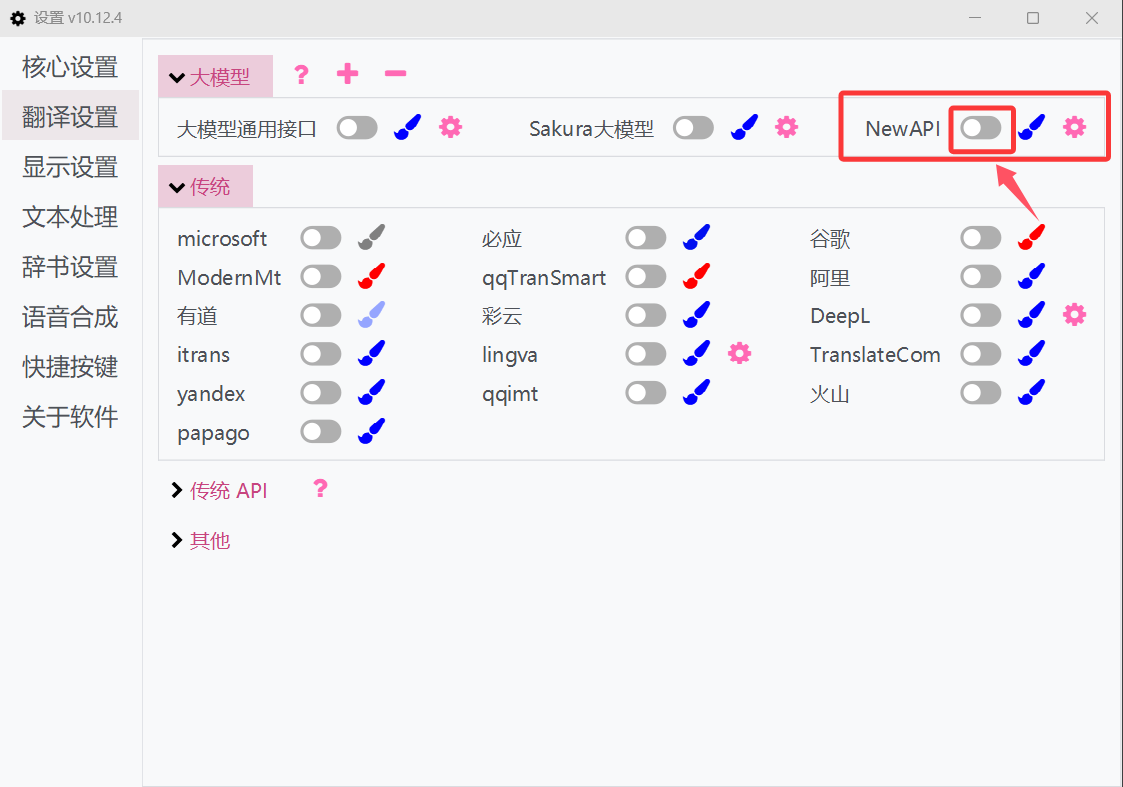
Check whether the toggle next to the new_api LLM interface configuration is on; if it isn't enabled, enable the interface to start using it
Manual configuration
-
In the
Models Hub->Console->Token Managementtab, get your API Key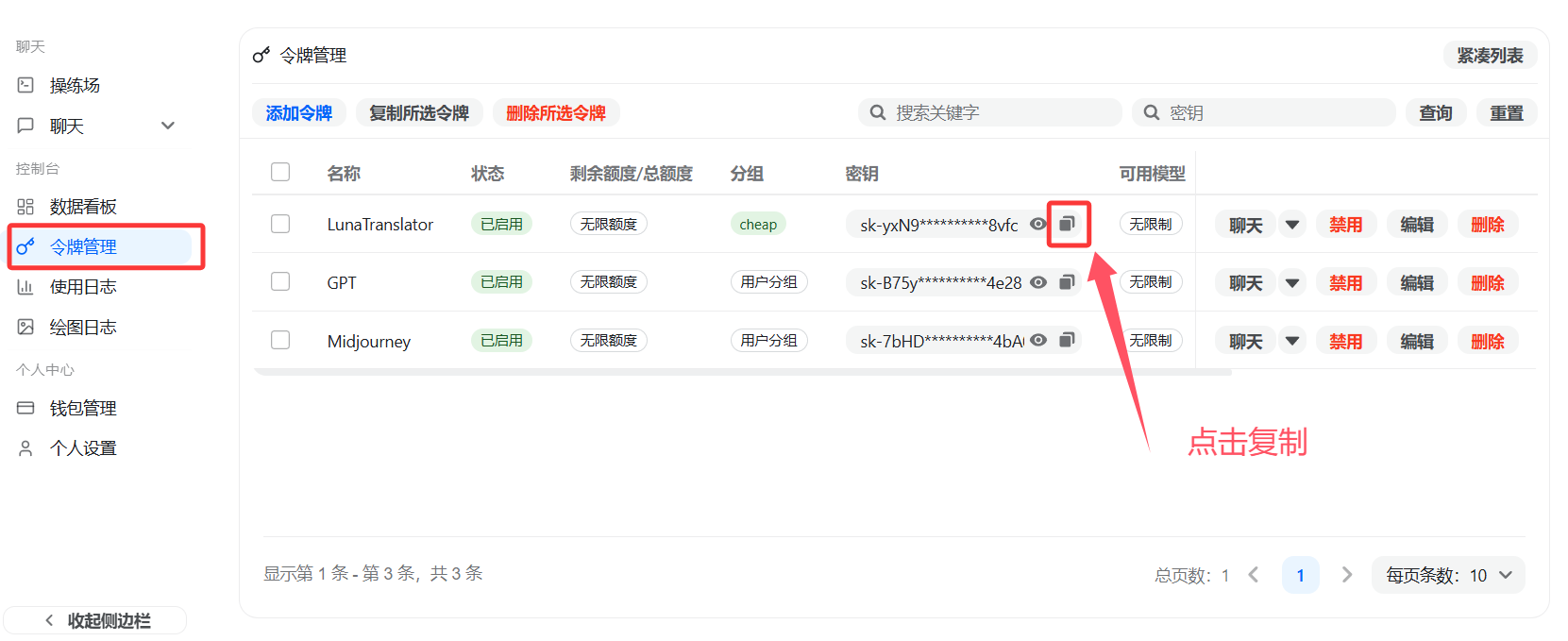
-
In
LunaTranslator->Settings-Translation Settings->LLM, choose to add one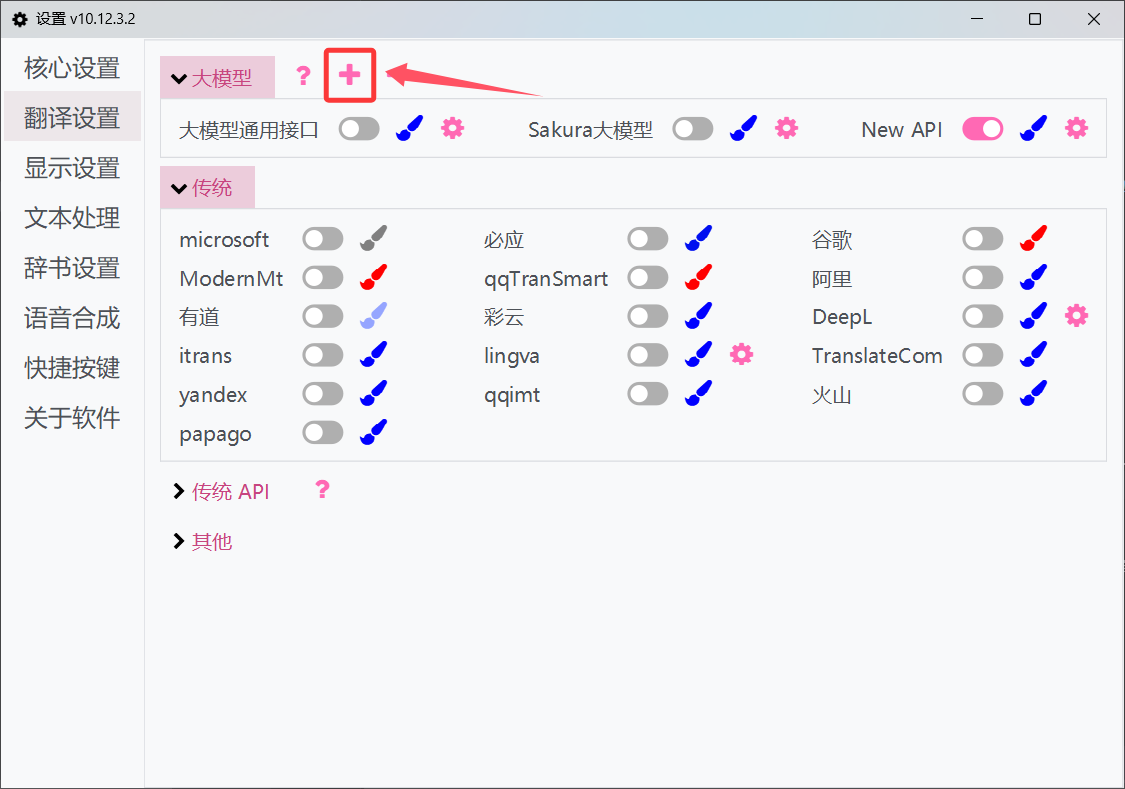
-
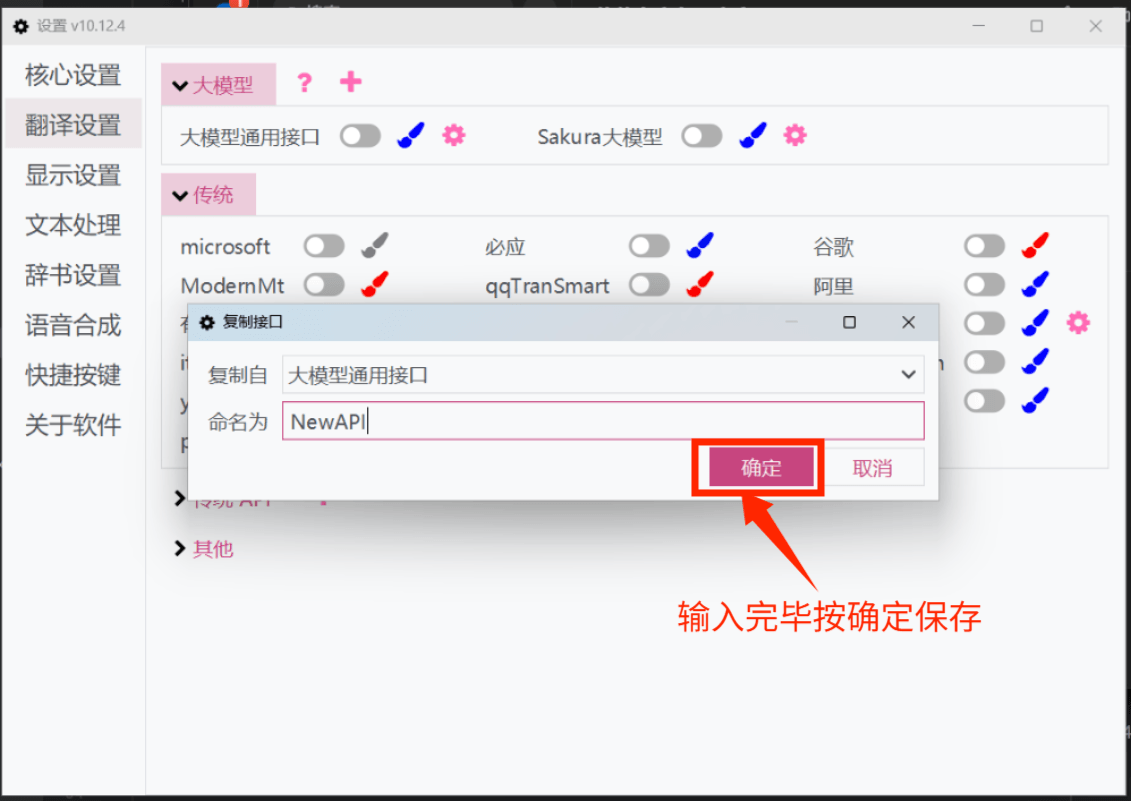
Copy the Generic LLM Interface template to add a new interface
-
In the newly added interface, fill in the corresponding API URL and API Key
-
Click the refresh button next to the model dropdown to fetch the model list from the Models Hub platform, select or type a model name, then click OK to save
-
Click the toggle next to Models Hub to enable the interface and start using it
For more usage details, see the official LunaTranslator documentation: LunaTranslator Documentation - LLM Translation Interface